PURSUE sensor videos lack data to prove anomalous velocities
Scientific analysis of 112 government videos finds that redacted sensor data prevents researchers from proving anomalous speeds or identifying objects.
Key figures
| PURSUE airborne sensor videos analyzed | 112 |
|---|---|
| Upper bound relative velocity in clip DOW-UAP-PR149 | Mach 0.4 |
| Potential craft speed mentioned in clip DOW-UAP-PR113 | Mach 5 |
A research paper published August 12, 2026, finds that 112 PURSUE airborne sensor videos lack the necessary data to resolve unidentified cases or prove anomalous velocities [1][2].
The analysis suggests that current government releases are insufficient for scientific verification of extreme speeds. This limitation prevents researchers from distinguishing between mundane objects and high-performance craft [1][2].
The videos were released under the Presidential Unsealing and Reporting System for UAP Encounters, known as PURSUE [1][2]. This initiative provides sensor footage of unidentified anomalous phenomena (UAP), but the paper argues that critical context is missing from the files [1][2].
Data gaps in sensor footage
The researchers state that redactions to on-screen displays limit the information available to identify the objects in the 112 videos [1][2]. To convert the rate at which an object moves across a frame—measured in pixels per frame—into a physical velocity, the study specifies that four specific data points are required [1][2].
These required points include the range to the object, the velocity of the aircraft performing the observation, the aspect angle between the object's path and the observer, and the field angle of the camera [1][2]. According to the paper, no PURSUE video provides this complete set of information [1][2].
Limits of kinematic inference
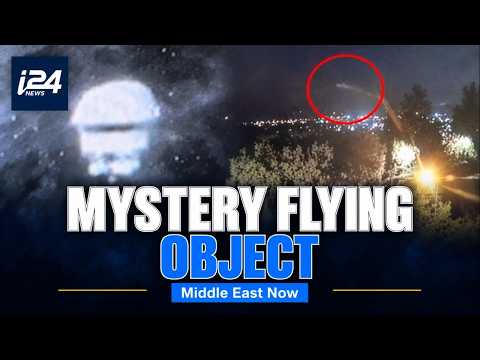
The study highlights two specific clips to illustrate how missing data leads to multiple possible interpretations. In clip DOW-UAP-PR113, the object crosses depression-angle markings, which allows the researchers to reconstruct the camera's field of view [1][2].
However, the researchers found that even this clip does not provide enough data to be conclusive [1][2]. They note the footage cannot distinguish whether the object is a bird flying at close range or a large craft traveling at Mach 5 a kilometer away [1][2].
A second clip, DOW-UAP-PR149, provided slightly more utility because it included a vessel of known size in the frame [1][2]. By using the vessel as a reference, the researchers calculated an upper bound of Mach 0.4 for the object's relative velocity [1][2].
Conclusion on anomalous velocities
The researchers conclude that the PURSUE sensor videos, in their present form, cannot conclusively indicate anomalous velocities [1][2]. Without the redacted kinematic data, the footage cannot fully resolve the unidentified cases [1][2].
The paper indicates that the lack of transparency regarding aircraft telemetry and camera specifications prevents a definitive physical analysis of the phenomena [1][2]. Consequently, the current state of the PURSUE releases is deemed insufficient for establishing the physical reality of the reported anomalies [1][2].
What we don't know
- What specific information was redacted from the on-screen displays?
- Will the PURSUE initiative release the missing kinematic data, such as range, velocity, aspect angle, and field angle?
- Whether other independent analyses of these 112 videos have reached different conclusions using alternative methods.
- The identities of the researchers who authored the paper.
Sources
- Limits on Kinematic Inference from the PURSUE Airborne Sensor Videos — arXiv: unidentified anomalous phenomena, Aug 12, 2026
- Limits on Kinematic Inference from the PURSUE Airborne Sensor Videos — doi.org