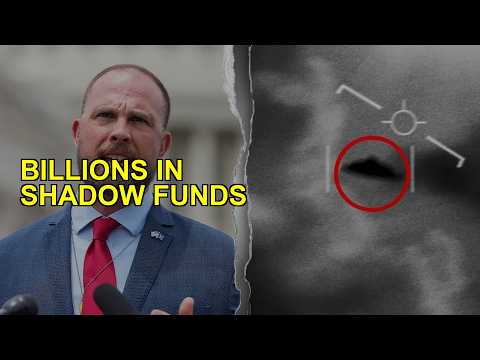
Researchers analyze 'UFO taboo' in international relations theory
Scholars argue that treating non-human intelligence as a rational possibility can help rethink planetary politics and the nature of human sovereignty.
Academic researchers are challenging the "UFO taboo" in international relations and political theory. They argue that the extraterrestrial hypothesis is a rational subject for scientific and political study [4, 8].
This effort seeks to move the study of unidentified anomalous phenomena (UAP) from the fringes of ufology into formal political science. Researchers aim to rethink how humans conceptualize sovereignty, power, and planetary security [4, 8].
The 'UFO Taboo' in Political Science
Some describe the resistance to studying UAP in academia as an active reproduction of ignorance rather than a simple lack of data.
In a 2008 paper, "Sovereignty and the UFO," Alexander Wendt and Raymond Duvall claimed a "UFO taboo" exists within international relations theory [4]. They argued UFO ignorance is not a mere gap in knowledge—comparable to the search for a cure for cancer—but is something actively reproduced by taboo [4].
The authors argued this taboo maintains an anthropocentric model of sovereignty. This model views human states as the sole holders of authority on Earth [4].
This framework draws from a European philosophical tradition rooted in Christian political theology, treating sovereignty as the "crown of authority" in polities [4]. Wendt and Duvall asked, "Why is human ignorance not only unacknowledged, but so emphatically denied?" [4].
The Case for the Extraterrestrial Hypothesis
Some researchers propose the extraterrestrial hypothesis (ETH), which suggests an extraterrestrial civilization (ETC) is active on Earth today [8].
Proponents claim advances in biology make the idea that complex life is rare in the galaxy improbable [8].
They suggest an advanced civilization would have "convergent instrumental goals," specifically self-preservation and the acquisition of resources [8]. These goals would motivate them to gather information about inhabited planets or remove potential rivals before they become dangerous [8].
This perspective uses models like the "dark forest" or "zoo/interdict" hypotheses to argue the ETH is not highly improbable [8].
These researchers argue the ETH does not contradict well-tested scientific knowledge. Therefore, the evidence required to support it does not need to be "extraordinary" [8].
They claim some evidence already exists, including reliable witness reports [8]. They note that while most UAP reports have human or natural explanations, this does not invalidate the ETH [8].

New Academic Institutions
Efforts to formalize these studies are appearing in new venues. Limina is described as an open access, peer-reviewed academic journal devoted to advancing the study of UAP [6].
Scholars are using the "alien" as a tool for political analysis. In an article published July 12, 2026, Michael Uhall argued that political theory must incorporate the alien to rethink spacepower and planetary politics [1, 2].
Uhall suggests that rethinking boundaries of knowledge under Space Age conditions is necessary to understand modern institutional uncertainty [1, 2].
Risks of Contact
Other academic debates center on the risks of searching for intelligence. In discussions regarding the Search for Extraterrestrial Intelligence (SETI), the risk of passive detection—simply receiving a signal—is generally viewed as negligible [5].
This highlights a divide in the field. One perspective suggests that the risk of merely detecting an alien signal from passive SETI activity is usually considered to be negligible [5]. The other argues that the active presence of non-human intelligence is already a factor political theory must address [5, 8].
What we don't know
- What specific "reliable witness reports" are cited as evidence for the ETH in the European Journal for Philosophy of Science? [8]
- How has the "prestige economy" of international relations specifically penalized scholars who cite "Sovereignty and the UFO"? [4]
- Whether there is consensus among political scientists on how an extraterrestrial presence would legally alter the current definition of state sovereignty [4].
Sources
- The “UFO Taboo” Is What IR Theorists Make of It: “Sovereignty and the UFO” in Citational Perspective — pmc.ncbi.nlm.nih.gov
- The Search for Extraterrestrial Intelligence: A Realpolitik Consideration — sciencedirect.com
- Articles | Limina - The Journal of UAP Studies — limina.scholasticahq.com
- The extraterrestrial hypothesis: an epistemological case for removing the taboo - European Journal for Philosophy of Science — link.springer.com