Saudi Arabia installs first Asian LaserSETI detectors at AlUla Manara
The kingdom's new detectors at AlUla Manara mark the first Asian site in a global network searching for laser signals from alien civilizations.
Key figures
| Distance north of AlUla | 74 kilometers |
|---|---|
| Distance from Medina (Madinah) | 380 kilometers |
| Sky imaging range | 75 degrees |
| Planned future telescopes | one 4-meter telescope and two 2-meter telescopes |
Timeline
- Founding of the King Abdullah University of Science and Technology (KAUST)
- LaserSETI network has been under development
- Saudi Arabia installs first Asian LaserSETI detectors at AlUla Manara
Saudi Arabia installed two LaserSETI optical detectors at AlUla Manara on August 19, 2026, establishing the first such site in Asia [1].
The deployment integrates the kingdom into a global network searching for laser pulses from extraterrestrial technological civilizations. This move expands the geographic reach of the Search for Extraterrestrial Intelligence (SETI) Institute, a non-profit organization that monitors the cosmos for signals using ground-based facilities like the Allen Telescope Array as well as space-based tools such as the Hubble telescope [1].
Saudi Arabia establishes Asia's first LaserSETI site
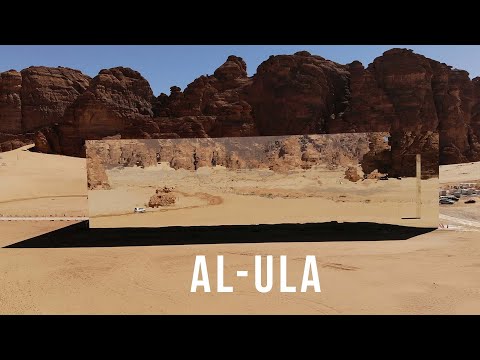
The two detectors are located at AlUla Manara, a remote plateau situated approximately 74 kilometers north of AlUla and 380 kilometers from the holy city of Medina (Madinah) [1]. According to the SETI Institute, the site is the fifth LaserSETI location worldwide and the first positioned in Asia [1].
AlUla is a designated Dark Sky Park and Saudi Arabia's first UNESCO World Heritage Site, having hosted civilizations ranging from the Neolithic era through Roman and Ottoman times [1]. Naif Al Malik, AlUla Manara Executive Program Head, said the project is "translating our shared ambition into scientific capability on the ground" [1]. Al Malik added that connecting the area's dark skies to a global network creates opportunities for international collaboration and knowledge exchange [1].
Expanding the global network for extraterrestrial intelligence
The LaserSETI network has been under development since 2024 to detect rare transient events by watching the entire sky continuously [1]. Unlike most other SETI efforts, which are slower or target specific areas of the sky, LaserSETI is designed to catch brief flashes of light [1]. While most detections will be natural cosmic events, the goal is to identify a laser originating from another extraterrestrial intelligence (ETI) [1].
Prior to the Saudi Arabian installation, the network's four other sites were located in Arizona, California, Hawaii, and Puerto Rico [1]. Dr. Franck Marchis, Senior Planetary Astronomer and Director of Citizen Science at the SETI Institute, stated that the AlUla site provides a critical geographic vantage point [1]. He noted that the project requires "instruments distributed around the world, observing continuously and together" [1].
Cost-efficient engineering and real-time detection
The detectors use commercially available lenses and solid-state detectors to image roughly 75 degrees of the sky [1]. To reduce costs, the instruments incorporate 3-D printed components [1].
A custom transmission grating and stainless-steel enclosure—the only non-commercial parts—allow the system to differentiate between broad-spectrum starlight, which produces a full spectrum from blue to red, and the specific characteristic wavelengths of lasers [1]. On-site computers analyze data in real-time to enable immediate alerts and eliminate the need for expensive data storage [1].
Eliot Gillum, the Director of LaserSETI who also designed and built the units, said, "Every new location improves our ability to monitor the sky continuously" and allows researchers to compare observations of unusual events from different parts of the world [1].
The future of AlUla Manara as an astronomical hub
The installation is part of a broader effort to establish AlUla Manara as Saudi Arabia's first major astronomical observatory [1]. This represents a shift for the kingdom, which has historically been known as a conservative society where science was secondary to other interests and wealth was derived primarily from oil [1].
In recent decades, Saudi Arabia has increased its scientific investment, including the 2009 founding of the King Abdullah University of Science and Technology (KAUST) [1]. KAUST is the highest-ranked university in the Arab World and has hosted the Middle East's fastest supercomputer [1]. If successful, future plans for AlUla Manara include the installation of one 4-meter telescope and two 2-meter telescopes [1].
What we don't know
- What is the specific budget for the AlUla Manara observatory project?
- When are the 4-meter and 2-meter telescopes expected to be installed?
- How many transient events have the AlUla detectors recorded since becoming operational in August?
Sources
- Saudi Arabia Joins the Search for Alien Civilizations — Universe Today, Oct 23, 2026